Security vs Convenience: Striking the Right Balance
Expert Commentary & Opinion Policy & public Interest CommentaryPosted by admin on 2026-08-07 07:48:32 |
Share: Facebook | Twitter | Whatsapp | Linkedin Visits: 94
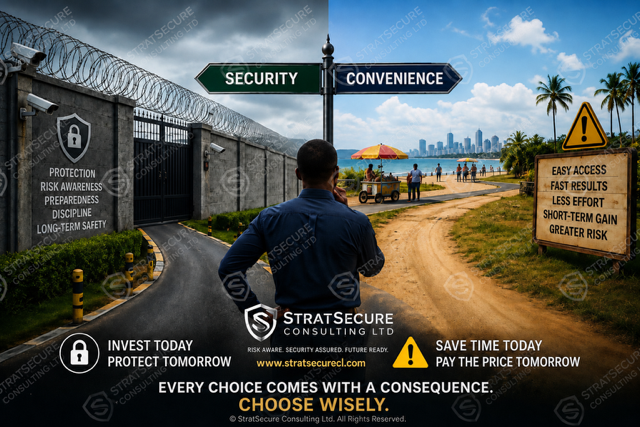
Security
vs Convenience: Striking the Right Balance
By
Kelvin Amegbor
Convenience has quietly
become one of the most powerful currencies of modern life. We crave faster
access, fewer checks, smoother processes, and as little friction as possible in
how we work, travel, bank, and communicate with one another. Propping open an
office door for a colleague, sharing a password “just this once,” or skipping a
verification step to save a few minutes can all feel harmless, even generous,
in the moment. Yet a closer look at the history of security failures tells a
different story: most of the damage done to organisations does not begin with a
criminal mastermind or a sophisticated cyberattack. It begins, far more often,
with a small, well-intentioned shortcut. The real challenge facing modern
organisations, then, is not choosing between security and convenience, but
learning to hold both in a thoughtful, intelligent balance.
It is tempting to frame
security and convenience as opposing forces locked in permanent tension, with
security cast as the slow, restrictive, and frustrating counterpart to a
convenience that is efficient, flexible, and endlessly accommodating. This
framing, however appealing, is fundamentally misleading. In practice, poor
security produces far greater inconvenience than any control ever could. Data
breaches, fraud, theft, operational shutdowns, and safety incidents ripple
outward to disrupt lives, damage hard-won reputations, and impose costs that
dwarf whatever momentary ease was gained by bypassing a rule. The honest
question organisations should be asking is not whether security is
inconvenient, but whether the risks left unmanaged are ones they can genuinely
afford to carry.
Many organisations,
especially those growing quickly, fall into the trap of prioritising short-term
ease over long-term protection, often without fully realising they are doing
so. Access controls get relaxed to keep projects moving. Approval processes are
skipped to meet looming deadlines. Sensitive information travels informally,
shared in the spirit of simply “getting things done.” None of these decisions
tends to be malicious; they are, instead, deeply human responses to pressure,
expectation, and a genuine desire to be helpful. But when convenience is
allowed to become the default decision-maker, vulnerabilities accumulate
quietly in the background, multiplying unseen until an incident finally drags
them into the light.
Striking the right
balance begins with a shift in understanding: security exists to enable
continuity, not to obstruct it. Effective security is not fundamentally about
saying no; it is about making sure that every yes does not come at the expense
of safety, trust, or resilience. When security measures are designed without
regard for how people actually work, they invite quiet resistance and creative
workarounds. Employees rarely set out to break the rules for its own sake —
they do so when the rules feel disconnected from the reality of their
day-to-day work. This is precisely where thoughtful design and genuine
expertise matter most, transforming security from an obstacle into an ally.
Human-centred security
starts from the recognition that people genuinely value efficiency and
simplicity, and it works with that instinct rather than against it. Instead of
imposing rigid, one-size-fits-all controls, it asks how protection can be woven
seamlessly into everyday processes so that doing the right thing is also the
easiest thing. Access controls that align neatly with job roles reduce both
risk and frustration at the same time. Authentication methods that are strong
yet genuinely user-friendly encourage compliance rather than avoidance. Clear
procedures that reflect operational realities remove much of the temptation to
cut corners in the first place. When security actively supports productivity
instead of competing with it, convenience and protection stop being rivals and
begin, quite naturally, to coexist.
Leadership plays an
outsized role in shaping this balance, often more than leaders themselves
realise. Employees watch closely how their leaders behave under pressure, and
they draw conclusions accordingly. When managers routinely bypass controls to
save time, they send an unmistakable signal that convenience outranks security
in practice, whatever the policy documents might say. When leaders insist on
responsible practices even when doing so is inconvenient, they communicate
something far more powerful: that protection is a shared value, not a
box-ticking exercise. This consistency builds trust and clarity throughout an
organisation, reassuring staff that security is not an arbitrary burden imposed
from above but a deliberate, considered choice to protect people and the
institution they belong to.
Culture, too, determines
whether security and convenience end up colliding or cooperating. In
environments where mistakes are punished harshly, people learn quickly to hide
errors and avoid reporting near misses, and this silence creates dangerous
blind spots where risks are left to grow unchecked. A genuinely healthy
security culture, by contrast, recognises that humans make mistakes and designs
systems that anticipate and absorb them gracefully. Encouraging open reporting,
learning honestly from incidents, and focusing on improvement rather than blame
reduces both risk and anxiety at once. In cultures like these, convenience is
not achieved by quietly bypassing controls but by continuously improving them.
Technology has added a
further layer of complexity to this balance. Digital tools promise speed and
flexibility, and they largely deliver on that promise, yet they also introduce
a whole new landscape of risk. Cloud platforms, mobile devices, and remote
access have made work more convenient than ever before, but they have also
blurred the once-clear boundaries between secure and insecure behaviour.
Clicking a suspicious link, connecting to an unsecured network, or reusing a
password across multiple accounts can undo layers of careful technical
protection within seconds. The answer is not to restrict technology
excessively, which only breeds resentment and workarounds of its own, but to
pair it with genuine awareness, ongoing training, and sensible safeguards that
respect how people actually use their digital tools.
It is equally important
to recognise that excessive security can be every bit as damaging as
insufficient security. Overly complex procedures, redundant approvals, and a
constant barrage of alerts create fatigue and, eventually, quiet resentment.
When people feel overwhelmed by controls, they disengage from them entirely,
and security fades into background noise that is ignored right up until
something goes seriously wrong. The right balance, then, lies in
proportionality: controls should match the actual level of risk, protecting
what truly matters without suffocating the routine operations that keep an
organisation running. This requires ongoing, honest assessment rather than a
single decision made once and never revisited.
Striking this balance is
not a static achievement to be checked off a list; it is a continuous, evolving
process. Threats change shape, operations shift, and expectations move with the
times, so what was both convenient and secure yesterday may well be risky
today. The organisations that succeed are those that revisit their assumptions
regularly, genuinely listen to feedback from the people using their systems, and
adapt their controls accordingly. They treat security not as a fixed set of
rules handed down once, but as a living system that grows and adjusts alongside
the organisation itself.
Experience across many
sectors consistently shows that organisations which manage this balance well
suffer fewer disruptions and recover far more quickly when incidents do occur.
Advisory firms such as StratSecure Consulting Ltd. have observed that the most
resilient institutions are those willing to invest real time in aligning their
security measures with human behaviour, rather than fighting against it. They
understand, crucially, that people are not the problem to be controlled but the
solution to be empowered. Ultimately, framing security against convenience is a
false choice from the start. The real goal is intelligent convenience —
convenience that is designed with genuine awareness of risk and responsibility.
When protection is woven thoughtfully into how people work and live, security
becomes less visible yet more effective, no longer felt as an obstacle but
experienced as a quiet assurance that things will keep functioning even when
pressure mounts.
In a world that prizes
speed and ease above almost everything else, choosing balance takes real
discipline and foresight. Yet it is precisely this balance that separates
organisations that merely operate from those that truly endure. Security and
convenience, when properly aligned, do not compete for the same ground. They
reinforce one another, creating environments where people can work confidently,
efficiently, and safely, together.
The writer is a Public
Safety Specialist and Team Lead at StratSecure Consulting Ltd, a Ghana-based
risk advisory firm providing risk and resiliency assessments, governance
advisory, crisis management planning, training, and operational support to
public institutions, private companies, NGOs, and critical infrastructure
operators. Tel: 0244215504 / info@stratsecurecl.com
Search
Categories
Recent News
- StratSecure Holidays Tips
- Cybersecurity Gaps in Ghana’s Digital Economy: Why Rising Cyber-Attacks Threaten Trust, Growth, and Financial Stability
- Okada Operations and Urban Insecurity in Ghana: Safety Risks, Crime Facilitation, and the Limits of Enforcement
- Public Safety Advisory - NPP Presidential Primaries
- Inside the Fraud Chain: Mobile Money and Cyber Fraud in Ghana and the Hidden Role of Insiders
- The Role of Governance in Reducing Organizational Threats in Ghana
- When the Algorithm Fuels the Mob: Social Media, Falsehoods, and the Emerging Security Threat in Ghana and Africa.
- How to Build a Security-Aware Workforce in Ghana
Popular News
- The Role of Governance in Reducing Organizational Threats in Ghana
- Chasing Likes, Losing Values: How Social Media Validation Is Pushing Some Young People into Crime
- Cybersecurity Gaps in Ghana’s Digital Economy: Why Rising Cyber-Attacks Threaten Trust, Growth, and Financial Stability
- Okada Operations and Urban Insecurity in Ghana: Safety Risks, Crime Facilitation, and the Limits of Enforcement
- When the Algorithm Fuels the Mob: Social Media, Falsehoods, and the Emerging Security Threat in Ghana and Africa.